
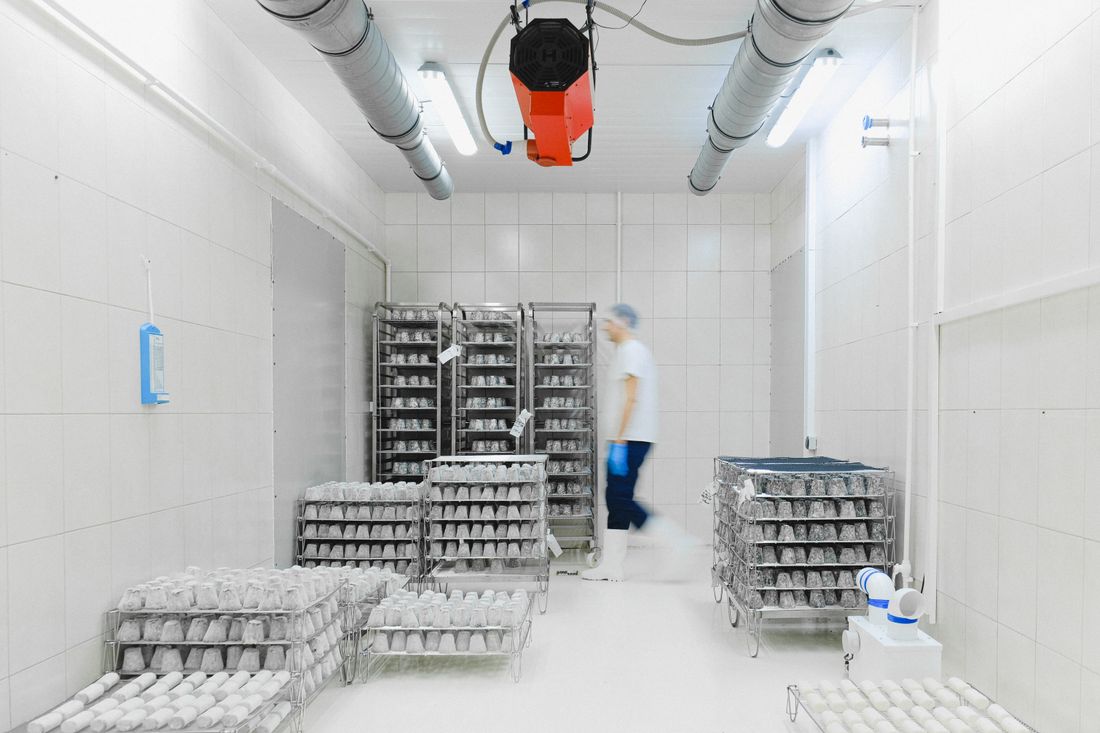
Cold storage sites and refrigerated warehouses use electricity to maintain temperature-controlled operations. Solar PV can reduce grid electricity purchases during solar production hours, but the business case depends on each facility's actual operations.
This guide explains what to assess before selecting panel capacity or batteries. It is an initial feasibility framework, not a savings guarantee or a universal sizing recommendation.
Why cold storage needs a site-specific study
Demand comes from compressors, fans, controls, defrosting equipment, lighting and handling operations. It changes with outdoor temperature, goods received, door openings, stored products and seasons.
A produce-packing facility active by day may have a very different load profile from a warehouse that operates continuously. Monthly bills alone do not reveal when equipment consumes electricity.
Information needed for an initial study
Prepare:
- The last 12 electricity bills and the applicable tariff or contract.
- Hourly or sub-hourly load data, if available; otherwise, measurements may be needed.
- Major equipment information: compressors, refrigeration systems, fans, pumps and their rated power.
- Working schedules, seasonal peaks and temperature setpoints.
- Usable roof or ground area, shading, structural condition and access.
- The electrical single-line diagram, existing protection and grid connection constraints.
Compare three scenarios
1. Solar self-consumption without batteries
Solar energy is primarily used on site during daylight hours. System sizing should reflect measured demand, solar resource and site constraints. Do not assume that surplus electricity can be sold without confirming regulatory and contractual eligibility.
2. Solar PV with battery storage
Batteries may shift some electricity to evening hours or support selected loads. A business case must compare lifetime storage costs with achievable benefits. A conventional battery system is not automatically an uninterrupted backup supply.
3. Energy optimisation alongside or before PV
Controls, energy monitoring, maintenance and operational adjustments can change the electrical demand a PV system must serve. A strong study examines these opportunities instead of sizing solely from invoice totals.
How to evaluate project economics
A documented model should cover estimated PV generation, on-site utilisation, avoided tariff costs, system losses, installation expenses, maintenance and assumed service life.
Compare scenarios when working hours or electricity prices change. Savings and payback periods are not guaranteed; they depend on measured site data and applicable requirements.
What the feasibility report should contain
Ask for:
- Recorded load data and clearly stated assumptions.
- Proposed PV capacity and estimated monthly production.
- A generation-versus-consumption comparison, including day and night.
- Roof, electrical safety and grid-connection constraints.
- With-battery and without-battery comparisons, where relevant.
- An itemised proposal for installation, monitoring and maintenance.
What if the cold store is considering a BESS?
Battery storage can be relevant to refrigeration sites with significant overnight demand, but it should not be specified without load data or a clear continuity objective. Our new guide to cold-storage BESS in Morocco explains the use cases and data required before an investment decision. Final design requires site-specific engineering. Explore our industrial battery storage solutions in Morocco for the project assessment approach, or request a BESS pre-assessment if you can share electricity bills and refrigeration operating hours.
A Morocco-specific approach
An agri-food facility, logistics warehouse, food-processing plant and seasonal cold storage station may all need different designs. The strongest solution is not necessarily the largest PV system: it is the one whose sizing and cost fit the site's operation.
Helio Core Technologies supports industrial feasibility assessments, PV solution selection and installation follow-up.
Request a site study to discuss your electricity use and the data needed for a tailored assessment.
Note: grid connection, self-consumption and surplus electricity rules must be verified for each installation.
Planning a solar project?
We visit your site anywhere in Morocco and give you a written file.
Request a site study