
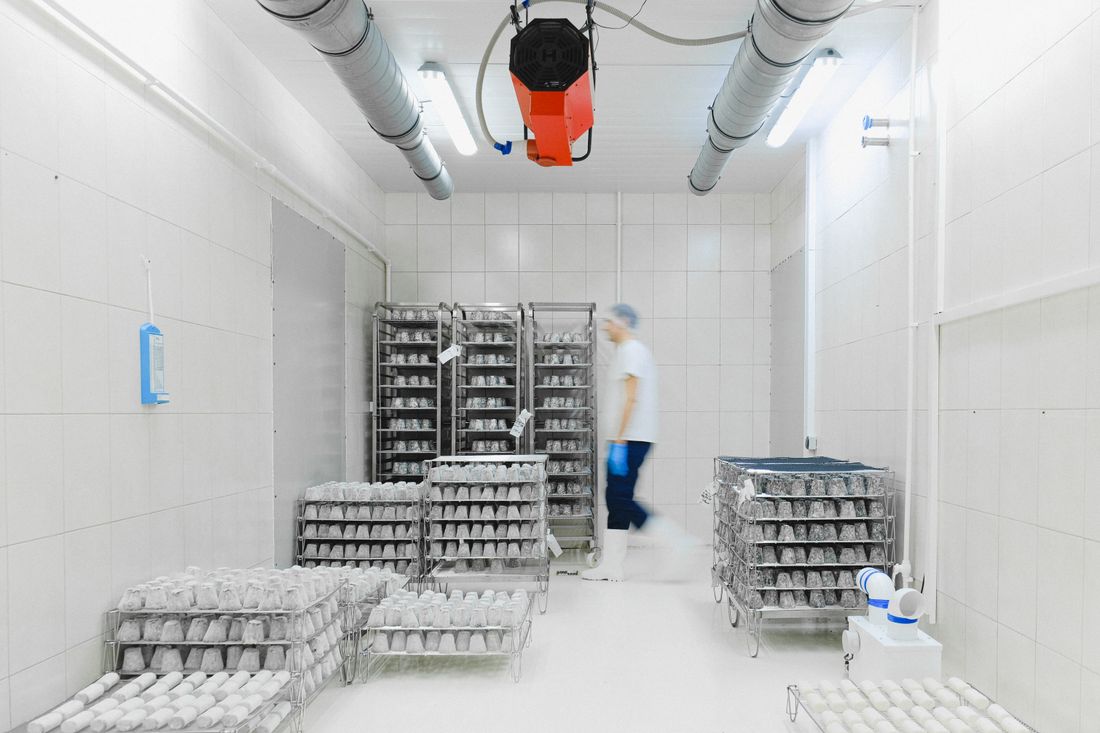
A refrigerated warehouse needs power to maintain product temperatures: compressors, condensers, fans, defrost cycles, lighting and auxiliary equipment all contribute to its electrical demand. A battery energy storage system (BESS) may help some Moroccan cold-chain operators, but storage is not necessarily the first or best investment.
The starting point is not the battery catalogue. It is which measurable problem storage would solve, and whether its total cost is justified.
Why cold-storage load profiles are different
Refrigeration can operate throughout the day and night. Electricity demand varies with ambient conditions, door opening, product throughput, operating schedules and defrost cycles. Certain electrical loads also have important start-up characteristics.
Monthly electricity bills alone cannot distinguish power demand in kW from energy consumed in kWh. Two warehouses with similar bills may require completely different energy strategies.
A useful feasibility assessment starts with measured interval load data wherever possible and includes seasonal and operational peaks rather than relying on an average day.
Four possible uses of BESS in refrigerated warehouses
1. Shift available solar generation
Where photovoltaic panels already exist, batteries can sometimes store usable excess daytime generation for later consumption. The size of that opportunity depends on actual PV surplus, round-trip losses and nighttime loads. Storage does not create additional solar generation.
2. Manage selected power peaks
A well-controlled BESS can reduce some short, predictable peaks. However, financial savings depend on the site's actual electricity supply contract and billing rules. No peak-demand saving should be assumed without validating whether it can affect the customer's bill.
3. Support critical loads during an outage
Critical compressors or controls may need carefully engineered backup architecture and switching arrangements. A normal grid-connected battery is not automatically a UPS, and backup performance must be verified separately against site requirements.
4. Coordinate energy controls
Refrigeration controls, preventive maintenance and, where food safety and equipment capabilities permit, thermal flexibility may reduce the need for electrical storage. Product-temperature requirements always come first.
Compare refrigeration efficiency with battery storage
Poor door seals, unwanted heat ingress or suboptimal controls may be better addressed before buying a battery. Lawrence Berkeley National Laboratory's refrigerated warehouse guide discusses load shifting, load shedding and operational efficiency opportunities.
These approaches are not blanket recommendations for Moroccan installations. Their use depends on the stored products, engineering constraints and operating procedures.
A good analysis compares a no-storage baseline, refrigeration-efficiency improvements, PV without batteries and PV plus BESS, where relevant.
Data needed for a first feasibility assessment
- Operations: Moroccan city, products stored, temperature requirements, working hours and seasonal workload.
- Electricity: ideally 12 months of bills, the tariff/contract, and time-stamped load measurements if available.
- Refrigeration equipment: compressor and motor power, defrost schedule, auxiliary loads and existing protections.
- Solar PV: current or planned PV capacity, generation profile and real excess production.
- Resilience objective: which circuits must keep operating, acceptable interruption time and any backup generator.
- Site constraints: installation area, ambient heat, ventilation, maintenance access and fire-safety arrangements.
These details support an initial scope. Final sizing requires qualified electrical and refrigeration engineering validation.
kW versus kWh: an illustrative calculation
kW describes how much power a BESS can supply at a particular moment. kWh describes the energy available over time.
For example, a 30 kW critical load supported for 2 hours would require 60 kWh delivered in a simplified theoretical calculation. Nameplate storage may need to be greater to allow for losses, usable state-of-charge limits, ageing and reserve. This is not a recommended system size or quotation.
Safety and local compliance
A BESS requires assessment of AC/DC electrical protection, battery management (BMS), power conversion (PCS), thermal management, monitoring, emergency access and maintenance. The US EPA's BESS safety overview is a useful international reference, not proof of compliance with Moroccan requirements.
Connection approvals, siting, fire safety, insurance and electricity tariff conditions must be checked for the specific Moroccan project.
Is the financial case attractive?
A battery's kWh rating does not determine payback. Compare total investment, operating and maintenance costs, losses and component life against benefits that are demonstrably achievable under the site's contract and operating conditions.
Reliability benefits may matter significantly to a cold-chain business but are not the same as guaranteed electricity-bill savings.
FAQ: cold-room battery storage
Does BESS replace a diesel generator?
Not automatically. Required operating time, starting currents, switching architecture and risk assessments determine which backup configuration is appropriate.
Will a BESS run refrigeration all night?
Only if power, usable energy and the overall electrical design satisfy the selected loads and operating duration. It cannot be inferred from a battery catalogue's kWh rating.
Can we start without interval load data?
Yes. An initial online discussion can identify missing measurements; a full technical proposal may require further monitoring and a site assessment.
Request an initial BESS assessment in Morocco
Helio Core Technologies helps frame project requirements and coordinate the technical checks required before equipment selection. Explore our industrial BESS service and solar PV guide for Moroccan cold stores.
Describe my cold-storage project and request a BESS pre-assessment, an online first step, without guaranteed savings or performance claims.
Informational article only. Cold-chain stock photograph by Anna Shvets, Pexels, used under the Pexels license. This is not a Helio Core installation.
Planning a solar project?
We visit your site anywhere in Morocco and give you a written file.
Request a site study